 Previous §
Zweyter Teil | Part II


| Previous § |
Essay on the True Manner of Playing the Clavier Zweyter Teil | Part II |
Next § |
| 9. Capitel. Vom Secundenaccord 1. Abschnitt. |
Chapter 9. On the chord of the second Section 1. |
§. 14. Wenn eine Grundnote mit 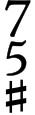 um eine Stufe in den weichen Dreyklang in die Höhe steigt, so findet man zuweilen über der letzten Note um eine Stufe in den weichen Dreyklang in die Höhe steigt, so findet man zuweilen über der letzten Note  oder oder 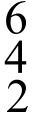 ; die Ursachen davon sind Vorschläge, welche mitgespielt werden müssen, und wobey also der Baß nicht herunter tritt, weil diese nur der Zierlichkeit wegen da ist, und der Dreyklang die eigentliche Harmonie ist. Die Secunde und Quarte gehen in die Terz, und die Sexte in die Quinte. Bey einer schwachen Begleitung kann die Quarte (a), und zuweilen die Sexte wegbleiben (b): ; die Ursachen davon sind Vorschläge, welche mitgespielt werden müssen, und wobey also der Baß nicht herunter tritt, weil diese nur der Zierlichkeit wegen da ist, und der Dreyklang die eigentliche Harmonie ist. Die Secunde und Quarte gehen in die Terz, und die Sexte in die Quinte. Bey einer schwachen Begleitung kann die Quarte (a), und zuweilen die Sexte wegbleiben (b):
|
§14. If a bass note with ascends by step to a minor triad, then one occasionally finds or over the second bass note; this happens because of appoggiaturas, which must not be omitted, whereby the bass does not descend by step because this is only there as an ornament, and the triad is the actual harmony. The second and the fourth proceed by step to the third, and the sixth to the fifth. In a thin harmony the fourth (a) and occasionally the sixth (b) can be omitted:
|
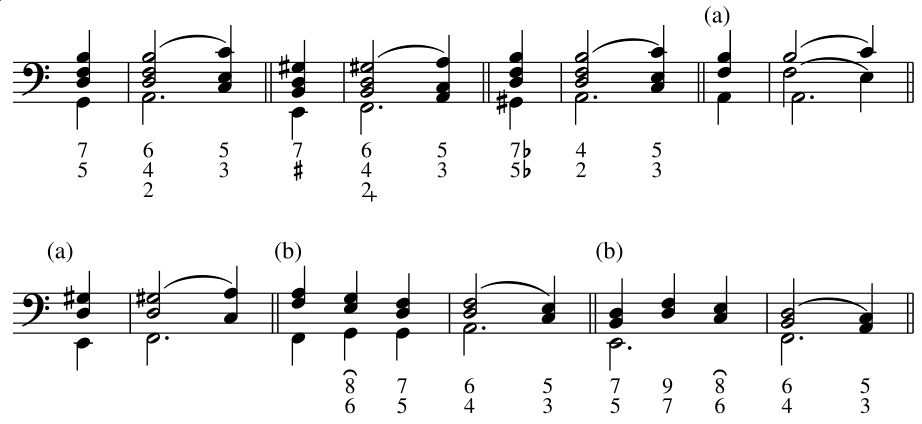
Ex. II:154 |
|
| Previous § |
Jump to any § in Chapter 9 | Next § |
Translation © 2026 The Packard Humanities Institute