 Previous §
Zweyter Teil | Part II


| Previous § |
Essay on the True Manner of Playing the Clavier Zweyter Teil | Part II |
Next § |
| 7. Capitel. Vom Terzquartenaccord 1. Abschnitt. |
Chapter 7. On the 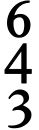 chord chordSection 1. |
§. 10. Wenn die große Sexte die reine Quarte und große Terz bey sich hat, so liegt entweder die Quarte oder die Terz vorher. Die letztere wird herunterwärts aufgelöset, indem die erstere liegen bleibt. Der Baß kann in einem Tone aushalten, wie es bey den Orgelpunkten gewöhnlich ist, er kann sich auch fortbewegen. Diese Aufgabe klingt am besten, wenn die Terz und Quarte zerstreuet liegen, und wird mit  bezeichnet. Wenn der Baß gebunden ist, so bleibt man bey vier Stimmen: außerdem aber kann die Quarte wegbleiben. Die beyden letzten Exempel vertragen lieber den Sextenaccord statt . bezeichnet. Wenn der Baß gebunden ist, so bleibt man bey vier Stimmen: außerdem aber kann die Quarte wegbleiben. Die beyden letzten Exempel vertragen lieber den Sextenaccord statt .
|
§10. When the major sixth has the perfect fourth and major third with it, then either the fourth or the third is prepared. The latter is resolved down, while the former remains held. The bass can either stay on the same note, as is usual in pedal points, or it may move. This chord sounds the best when the third and fourth are separated [as a seventh, rather than a second]; it is figured with . When the bass is tied, then one remains in four voices; otherwise the fourth can be omitted. The two last examples would be better with a 6-chord than .
|
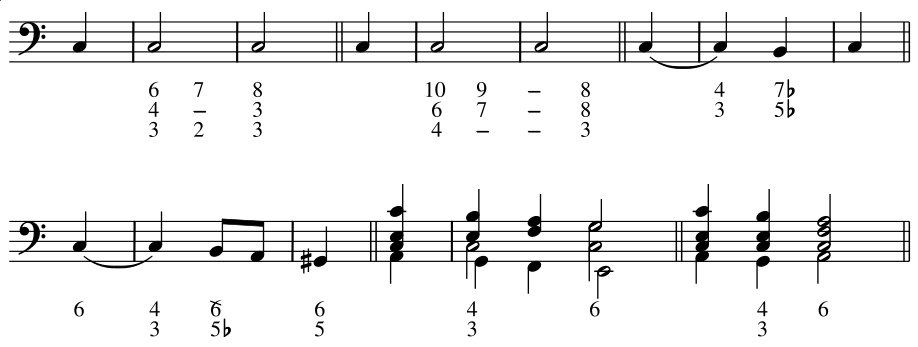
Ex. II:122 |
|
| Previous § |
Jump to any § in Chapter 7 | Next § |
Translation © 2026 The Packard Humanities Institute